

CPU brand is one of the least important things when you buy a desktop or laptop CPU. Unless you have gone really deep into the CPU architecture and want to grab some very specific performance benefits from specific microarchitectures, you just focus on the performance returns and never on the brand.
But there is a confusion in the market for sure.
For almost every Intel processor, you will find an AMD one processor that delivers the exact same speed. They are generally very competitive in terms of price-to-performance ratio as well. So, when someone asks me the question of AMD and Intel, I generally notice a pattern that people have heard some viewpoints or rumors. They just want to make sure they are not making a bad decision and choosing a wrong CPU brand. The CPU is, in fact, the primary component in most computers and should be purchased wisely. So, if brands are creating confusions for you, they should be cleared first of all.
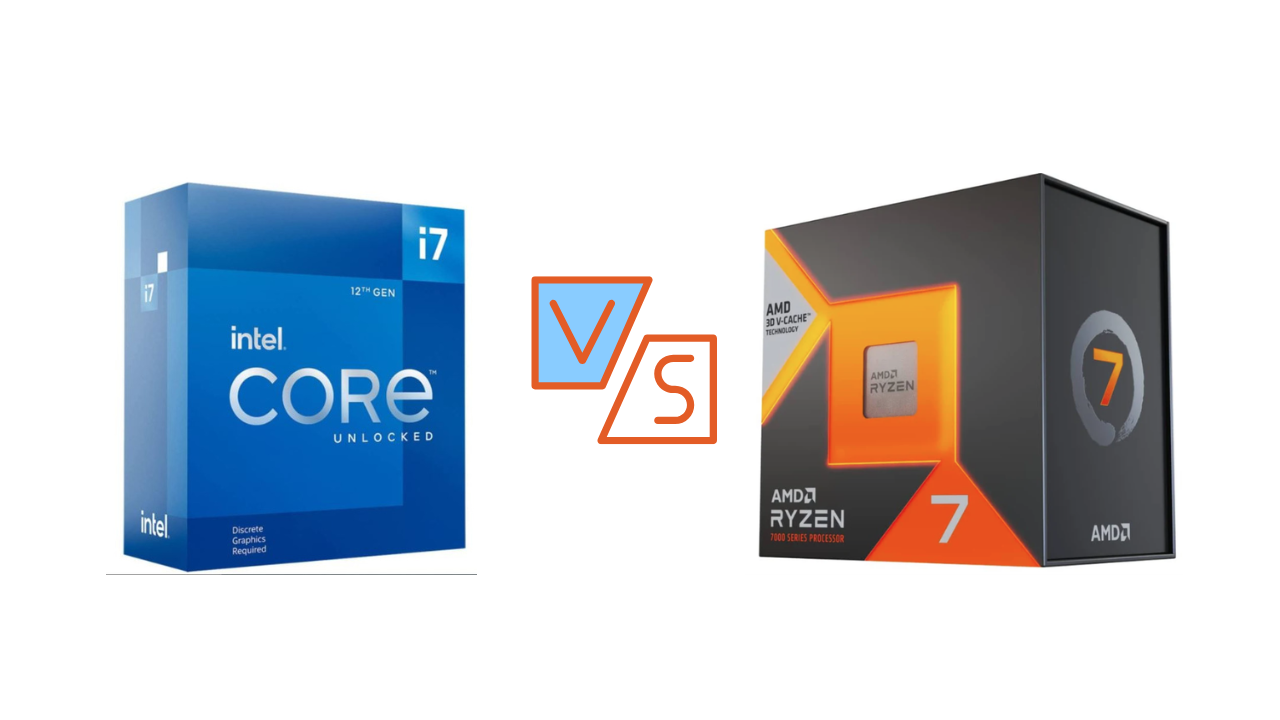
For example, when I recommend someone an AMD CPU, a lot of people say, “Don’t they get too hot?” or “I have heard Intel CPUs run much cooler than the AMD ones.”
I know they have a point. Modern AMD Ryzen CPUs, in fact, often run hot by design, frequently hitting 90°C to 95°C under heavy loads, but this is usually safe. That is a design behavior, and we are good to go with a good cooler. There are various other prejudices about both the brands that should be cleared if we really want the best CPU.
So, in this article, I am going to clear all your confusions on the Intel vs. AMD debate and maybe help you make a wise decision if you are trying to buy a new CPU.
A little history and current market trends.
Intel Core 2 Duo launched in 2006, and at that time, it just crushed AMD’s raging Athlon 64 lineup. For the next decade, Intel dominated the CPU market. In the mean time, in the year 2011, AMD’s Bulldozer architecture flopped really hard and took the company down with it. It is worth noting that between around 2003 and 2006, AMD had a good run, with its Athlon 64 being ahead of the Pentium 4. Intel’s Pentium 4 was also a well-known misstep (ran hot, had weak per-clock performance, and IPC not well managed). But, still, Intel was doing better than AMD up until the year 2016.

AMD’s comeback started with Ryzen in 2017. But the AMD became the “obviously better” pick, not just the value pick, with the release of Zen 3 in late 2020 (5800X/5900X). Zen 3 was the first AMD generation to beat Intel at gaming outright, not just at multi-core work. Intel’s 13th/14th-gen instability scandal in 2023–24 finished off what was left of the reputation.
In the desktop CPUs, AMD captured over 33% of the desktop market by late 2025, driven by strong demand for high-end Ryzen and X3D gaming processors. However, Intel maintained the majority of laptop shipments at around 75% to 78%, though AMD made consistent sequential gains in mainstream and premium notebook tiers.
According to Mercury research, currently AMD sells roughly 32.6%, while Intel sells roughly 67.4% of all overall x86 CPUs.
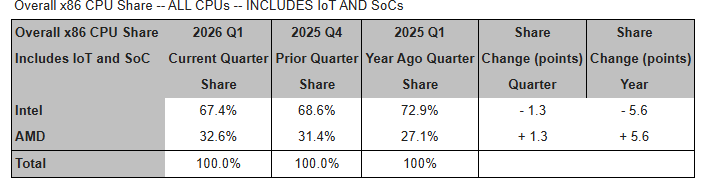
So, Intel is still the leader in terms of numbers, but AMD has given a really tough competition in recent years, and maybe both companies will soon reach an equilibrium in terms of sales. But this is just my assumption. The numbers are still on the Intel’s side, and there are strong reasons for it.
Current CPU lineup, and should you wait?
The current fight is between the AMD’s Ryzen 9000 and 9000 X3D series (AM5 platform) against Intel’s Arrow Lake Refresh (Core Ultra 200-series) “Plus” chips.
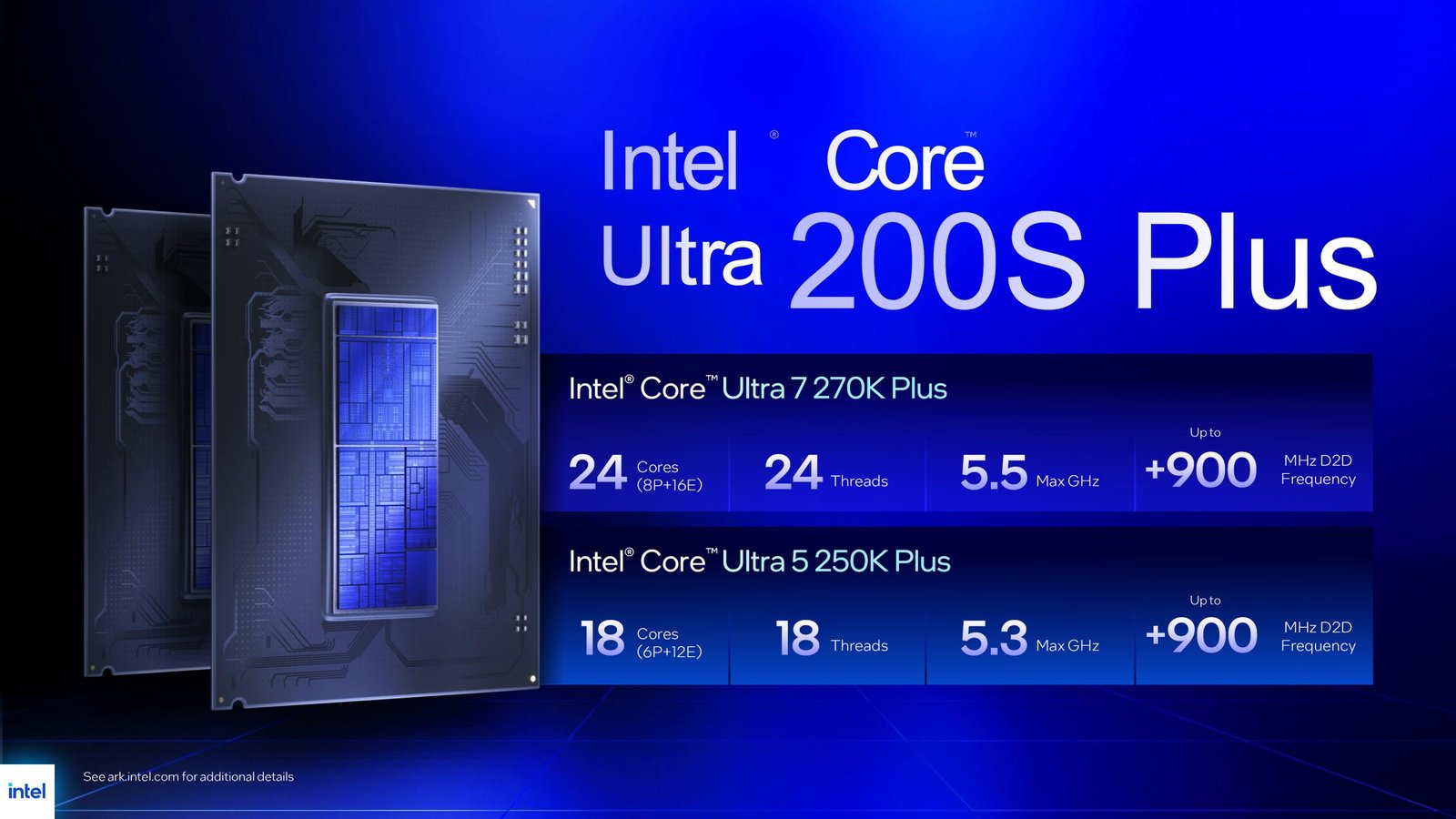
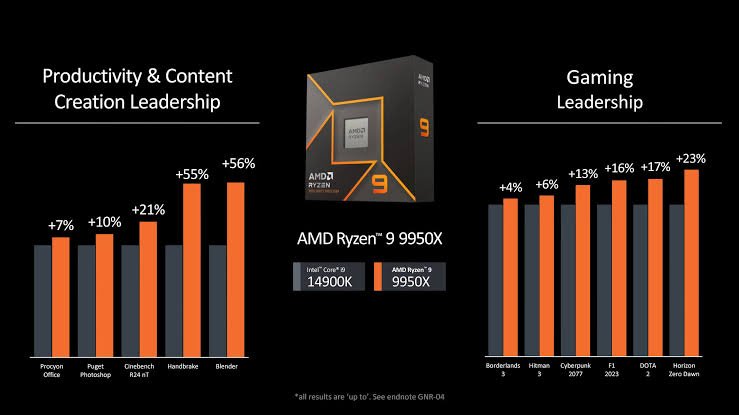
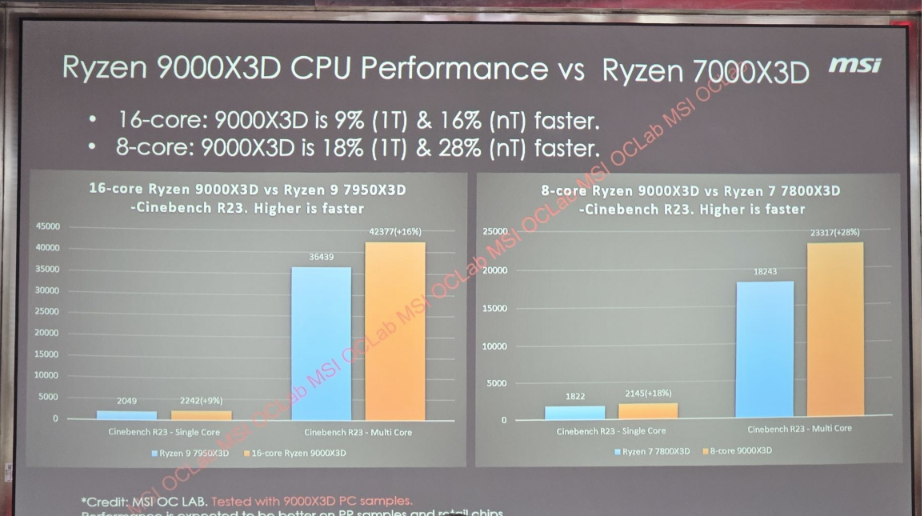
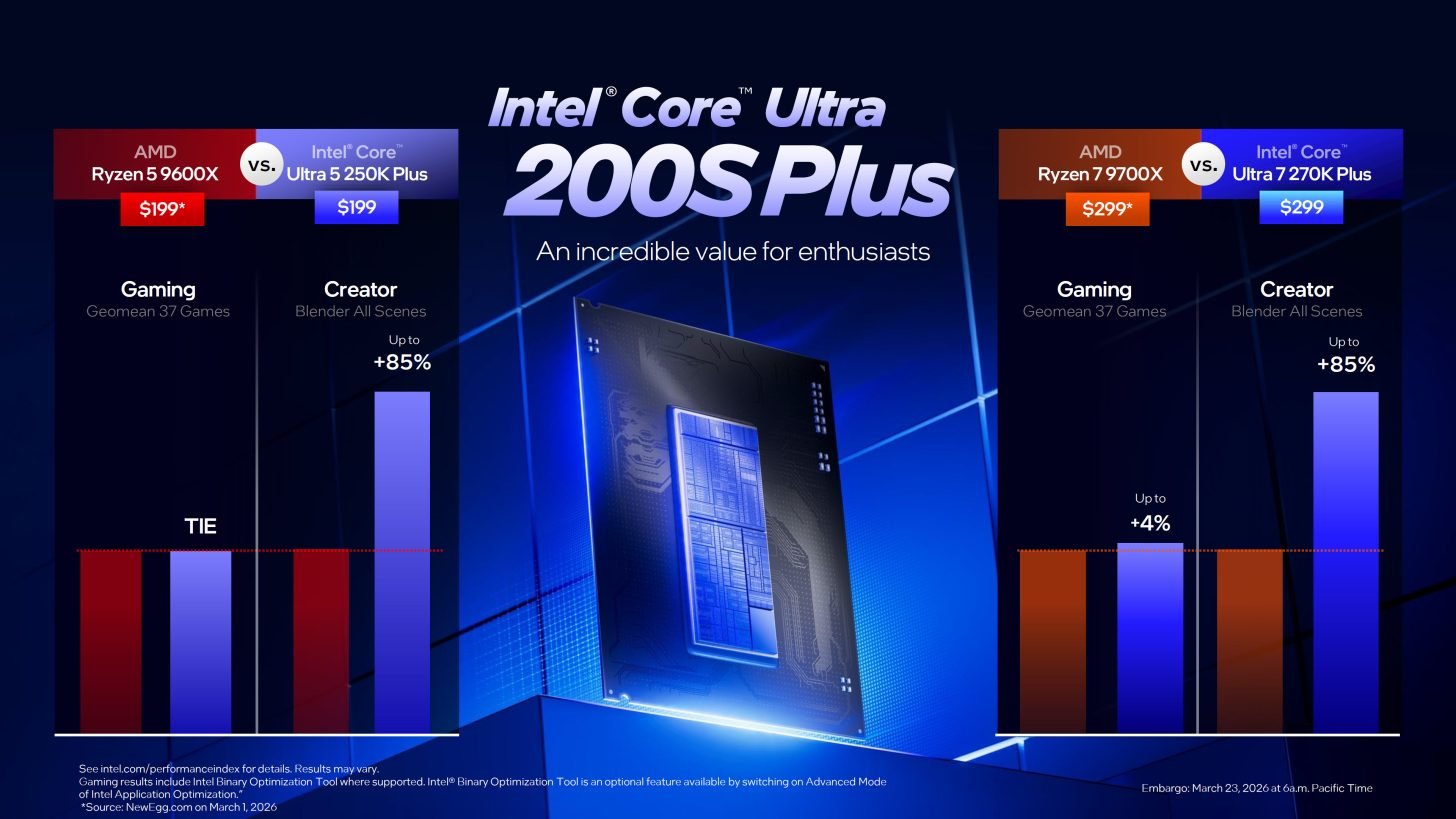
From the last generation of CPUs, the major competition is between AMD Zen 4 (mainly Ryzen 7 7800X3D) and Intel 14th-Gen Raptor Lake (Intel Core i9-14900K). In the budget segment, we can say that the Ryzen 5 9600X competes directly with the Intel Core Ultra 5 250KF Plus.
So, if you are wondering whether to wait for something better, you shouldn’t.
The next generation from both companies, AMD’s Zen 6 (“Olympic Ridge”) and Intel’s Nova Lake, have both reportedly slipped from 2026 to a CES 2027. Currently, you have the CPUs from different line-ups in front of you. It is just your preferences that will decide which one you pick.
Reliability and Platform Trust
On launch reliability, neither of the companies has a very decent record. Arrow Lake’s debut was genuinely underwhelming on the gaming side. That sits on top of the still-fresh memory of the 13th- and 14th-generation voltage scandal.
AMD, on the other hand, had the 2023 SoC voltage problem that killed some Ryzen 7000X3D chips on EXPO profiles, but nothing at the scale of Intel’s recent stumbles. AMD capped overclocking headroom on the earlier X3D chips to protect the stacked cache, which frustrated enthusiasts for two generations. That changed with the 9800X3D, which ships fully unlocked.
AMD surely has advantages when it comes to the upgradability path. AMD has committed to supporting the AM5 socket through 2029. Intel has already switched sockets once in this generation, moving from LGA1700 to LGA1851 for Arrow Lake. Maybe the socket will change again for the Nova Lake CPUs.
AMD is the right pick for gaming.
If gaming is your priority, just go for AMD. The Ryzen 7 9800X3D, built around AMD’s stacked 3D V-Cache, runs roughly 25 to 35% faster than Intel’s flagship Core Ultra 9 285K. And these are the results across a library of more than 100 tested games at 1080p and 1440p. The benchmarks can be compared for free on the internet.
Intel isn’t entirely out of the race, though. It remains genuinely competitive in budget esports builds, where the price-to-performance math is closer. They perform really well in the streaming setups that lean on Intel’s QuickSync hardware encoder to offload video encoding while gaming.
But if someone asks which CPU is actually faster for gaming in 2026, the honest, unhedged answer is AMD.
Productivity and Content Creation: It Depends on the Job
This is the category where genuinely “it depends.” Intel’s Core Ultra 9 285K is really good for heavy multi-threaded work with its 24-core hybrid design. Older CPUs also show great response in the multithreaded loads. The P and E-core configurations of Intel CPUs really stand out when they get the right job in their hands.
Things like video rendering in Premiere, 3D simulations, and compile-heavy programming are favored by raw core count. Intel’s QuickSync encoder also remains the fastest option for dedicated video export pipelines.
And this gap can be really dramatic. For example, in Cinebench multi-core testing, Intel’s Core Ultra 7 270K Plus has been clocked at more than double the score of AMD’s similarly priced Ryzen 7 9700X.
However, if I have to choose an AMD CPU for productivity, it is going to be the Ryzen 9 9950X, which trades a little peak multi-thread performance for being genuinely good at both productivity and gaming in the same box. But, if you ask me my honest take, it is always Intel for me when it comes to creativity and productivity applications.
Intel is the New Laptop King
For years, it was true that the AMD was the laptop king for its efficiency. But the game has changes in 2026. Intel’s Panther Lake chips, branded Core Ultra Series 3, are designed on the 18A manufacturing process. They are showing some real efficiency games rather than some marketing gimmicks.
Intel’s own testing claims 31 to 78% lower power draw than AMD’s Ryzen AI 365 across matched workloads. But the testing is done by the vendor itself; we cannot trust it 100%.
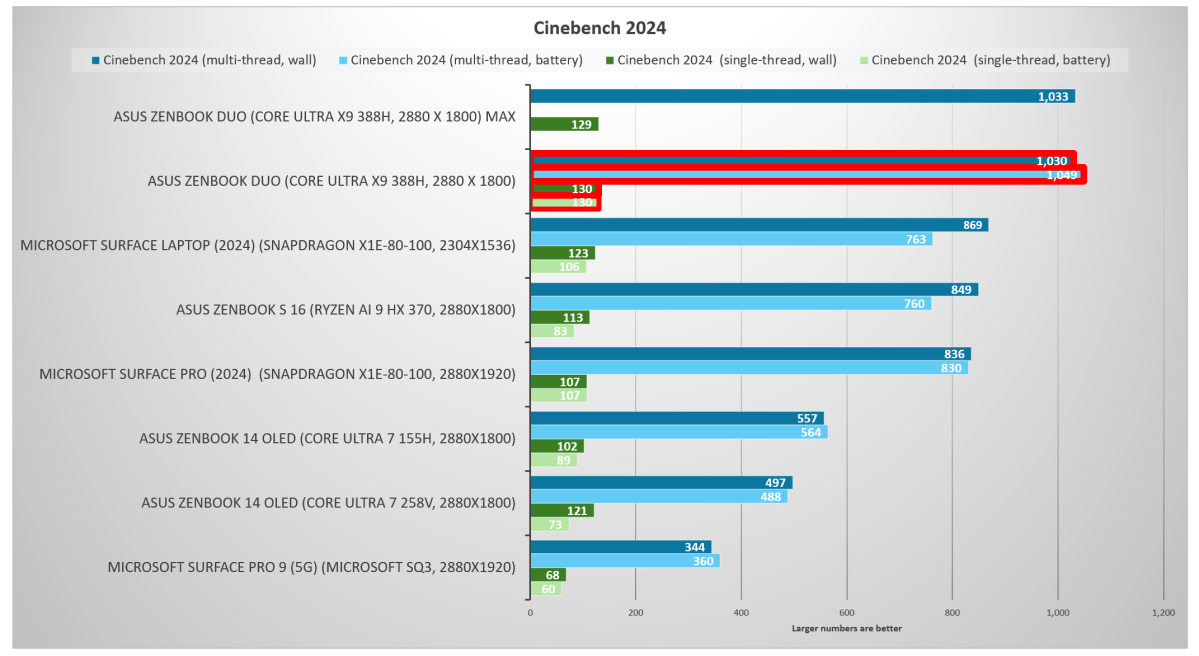
In a test done by PCWorld, the Core Ultra X9 388H processor achieves impressive battery life up to 27 hours with a strong performance. With AI frame generation, the FPS was boosted from 52 to 92 in titles like Cyberpunk.
On the other hand, AMD’s real counter is no longer the battery life. It’s raw compute and integrated graphics. A CES slide claimed 37% faster graphics and double the threads versus Panther Lake’s flagship. Plus, high-RAM Ryzen AI Max laptops can already run a 70-billion-parameter local model at a usable pace, which no Intel mobile chip currently matches.
CPU talks without DDR5 RAM prices are incomplete.
A 32GB DDR5 kit that cost $80 to $120 in early 2025 was selling for over $375 by June 2026, and the trend hasn’t reversed. A report from Gartner states that RAM prices are forecasted to increase by 130% by the end of 2026.
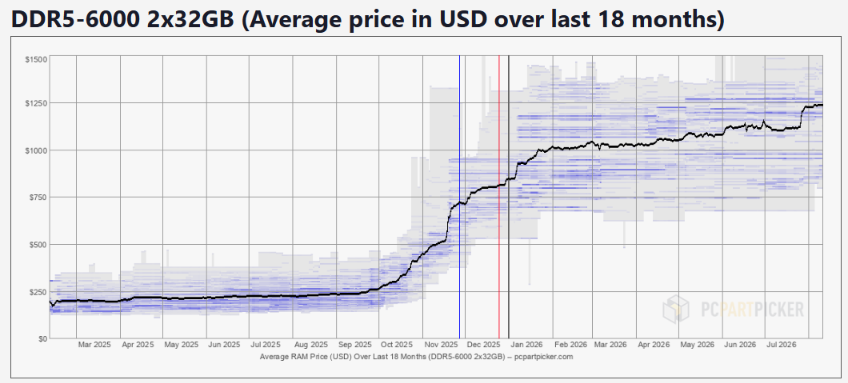
But how does it matter for our AMD vs. Intel decision?
The problem is that both AM5 and the current Intel LGA1851 platform are DDR5-only, so neither brand escapes this cost. If we have to get all the performance output from these very fast processors, we have to employ a faster RAM as well.
Now, what my genuine opinion may not be ideal for some users. Basically, if you’re building on a genuinely tight budget in 2026, an older Intel platform (12th through 14th generation, on the LGA1700 socket) that still supports DDR4 is a legitimate option. DDR4 prices are surely high but not as much as DDR5.
I would recommend going for an earlier-generation processor (whether from Intel or AMD) if your plans are not very ambitious towards the ultimate performance. It will save you a good amount of money for sure.
Which one to choose based on your needs
| If you’re buying for… | Choose | Why |
|---|---|---|
| Gaming, no other priority | AMD Ryzen 7 9800X3D | Fastest gaming CPU available. Cheaper than Intel’s flagship. |
| A do-everything flagship | AMD Ryzen 9 9950X3D | Gaming and heavy multi-thread work in one chip |
| Rendering, 3D, or compiling all day | Intel Core Ultra 9 285K | Core Count and QuickSync are just great. |
| A tight-budget desktop | Ryzen 5 9600X or Core Ultra 5 250K Plus | Both are close to each other |
| A new laptop | Intel Panther Lake, or AMD Ryzen AI Max for local-AI work | Intel now leads battery life. AMD is a good graphics and AI device. |
| The absolute cheapest full build | An older Intel 12th–14th gen system on DDR4. | It’s good not to pay extra for DDR5 is you are not an enthusiast. |
Conclusion
The talk about AMD vs. Intel is not very simple. As you start to go really deep into the pros and cons, issues and advantages, or history and future, the confusions start to rise more and more. So, it is better to understand your needs first and see which specific CPU is good for it. In terms of brand trust, both the companies are well-reputed. It is your needs that should decide which brand you choose. Surely, you can have some attachment to a brand that is fairly acceptable. Again, there is always an Intel CPU competing directly with an AMD CPU and vice versa.